When it comes to fitness and nutrition, you’ve probably heard fitness heads and coaches throw around terms like endomorph, ectomorph, and mesomorph — body types that supposedly determine how you should exercise and eat. But how accurate is this, really? And should your body type actually guide your diet or workout routine?
Let’s break it all down in a way that makes sense — no over complication.
Where Did These Body Types Come From?
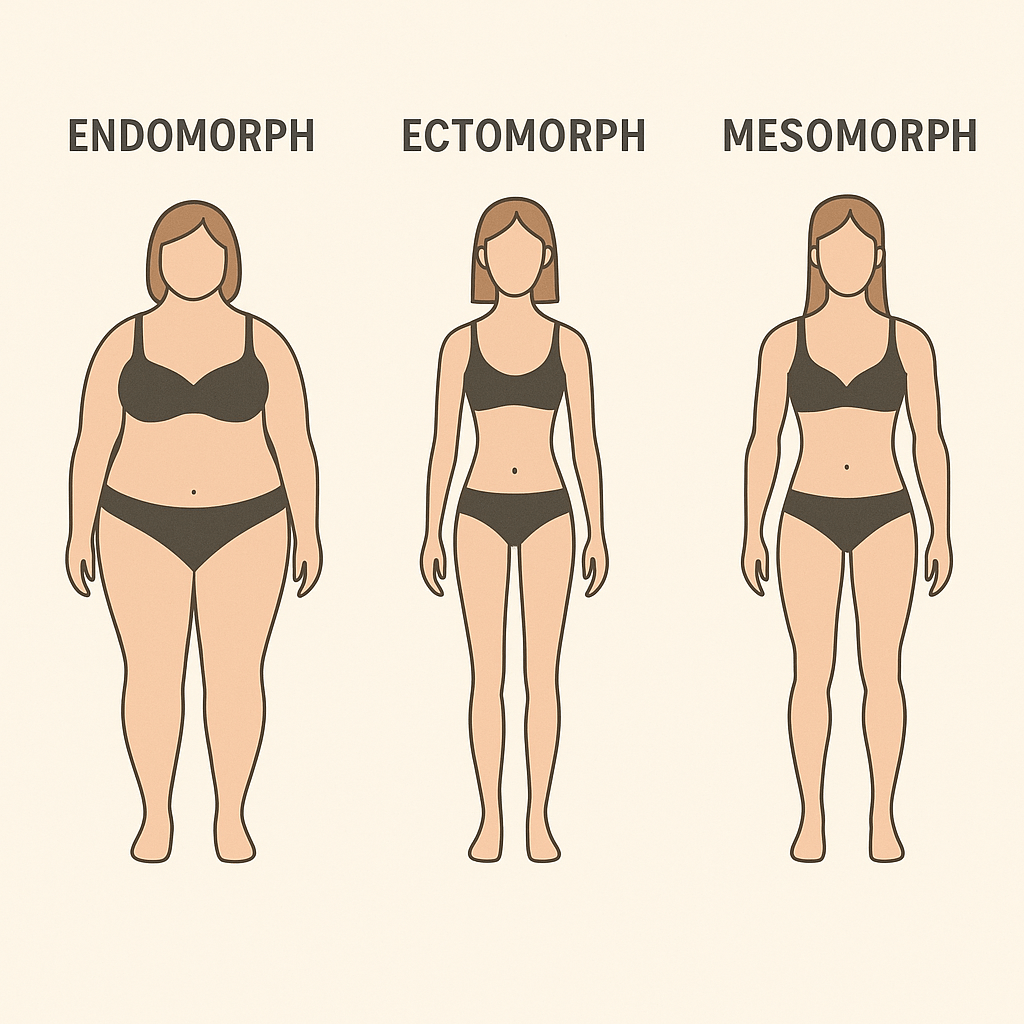
The concept of body types — or “somatotypes” — was introduced in the 1940s by American psychologist William Sheldon. He classified people into three main categories based on physical build and temperament:
- Ectomorph – thin and lean
- Mesomorph – muscular and athletic
- Endomorph – rounder and softer
Originally, Sheldon believed body type correlated with personality traits (e.g., ectomorphs were introverted, endomorphs more sociable, etc.). This theory has since been debunked, but the somatotype system stuck around in the fitness and nutrition world because it seemed to help explain different physiques and how people responded to exercise and food.
The Three Somatotypes Explained
Endomorph
- Traits: Softer, rounder body, wider hips, slower metabolism, gains fat easily
- Common Struggles: Fat loss may feel slower, more sensitive to carb intake
- Training Tips: Focus on resistance training + metabolic conditioning (circuits, interval training)
- Nutrition Notes: Higher protein, moderate fats, lower-moderate carbs; emphasize blood sugar balance
Ectomorph
- Traits: Naturally lean, narrow shoulders and hips, long limbs, fast metabolism
- Common Struggles: Difficulty gaining weight or muscle
- Training Tips: Focus on progressive strength training, shorter cardio sessions, and adequate recovery
- Nutrition Notes: Higher calorie intake, especially carbs and protein; frequent meals can help meet needs
Mesomorph
- Traits: Naturally muscular and athletic, gains muscle easily, moderate metabolism
- Common Struggles: Can gain fat if inactive or eating in excess
- Training Tips: Responds well to both strength and endurance training; mix of compound lifts and conditioning
- Nutrition Notes: Balanced macros; moderate carb intake around workouts and consistent protein
So… How True Is This?
You might’ve heard that endomorphs are don’t process carbs well, ectomorphs have fast metabolisms, and mesomorphs are naturally gifted with high testosterone and growth hormone.
And while this sounds scientific, the truth is… it’s not that simple.
These ideas are based on older training theories and functional nutrition models — no real proof. Here’s what we do know:
- Endomorphs might have a harder time losing fat, but it’s often due to lifestyle habits (lower activity, higher appetite), not their nervous system or a fixed “carb intolerance.”
- Ectomorphs often burn calories faster and struggle to gain weight, but that’s more about movement, metabolism, and muscle mass.
- Mesomorphs do tend to respond quickly to training, but there’s no evidence they’re born with more testosterone or GH. Those hormones are affected by things like strength training, sleep, and stress.
Here’s the deal: Your “body type” isn’t your destiny. Very few people are purely one type. Most of us are a blend (e.g., ecto-meso or endo-meso). And while body type might loosely describe how you store fat or build muscle, it doesn’t define your results – your daily decisions do.
More importantly — somatotypes aren’t supported in modern exercise science. There’s no real data saying “endomorphs must eat low-carb” or “ectomorphs can’t do cardio.” Genetics, hormones, sleep, stress, training consistency, and calorie intake all play a far greater role.
Translation: Your results come from your habits, not your body.
Should You Still Use It?
Somatotypes can be a starting point to better understand your body, but they shouldn’t be used as your guideline to defining your diet and exercise regimen.
Instead of saying:
“I’m an endomorph, so I can’t lose weight.”
Say:
“I may be more prone to fat storage, so I’ll be more mindful of my food choices and activity.”
Use body type awareness to:
- Set realistic expectations
- Choose smarter training strategies
- Personalize your macros (but don’t obsess over it!)
Let It Inform, Not Define
At the end of the day, your body type isn’t a limitation — it’s a starting point. You can build strength, improve your metabolism, and create sustainable changes no matter your frame. Regardless of your somatotype, what applies across the board is
- Consistency with your workouts: follow the same plan for 4-6 weeks, workout 3 – 5 times a week with progressive overload
- Nutritional habits that support your goals – protein and vegetables always first
- Adjusting your plan based on how your body responds, not just what a label says
Want support creating a workout and nutrition plan for your unique body?
Apply for my 1:1 coaching — we’ll build a plan that works with your life, not against it.
 Strength, Confidence, and Sustainable Habits for Busy Women Who Are Ready to Stop Starting Over